
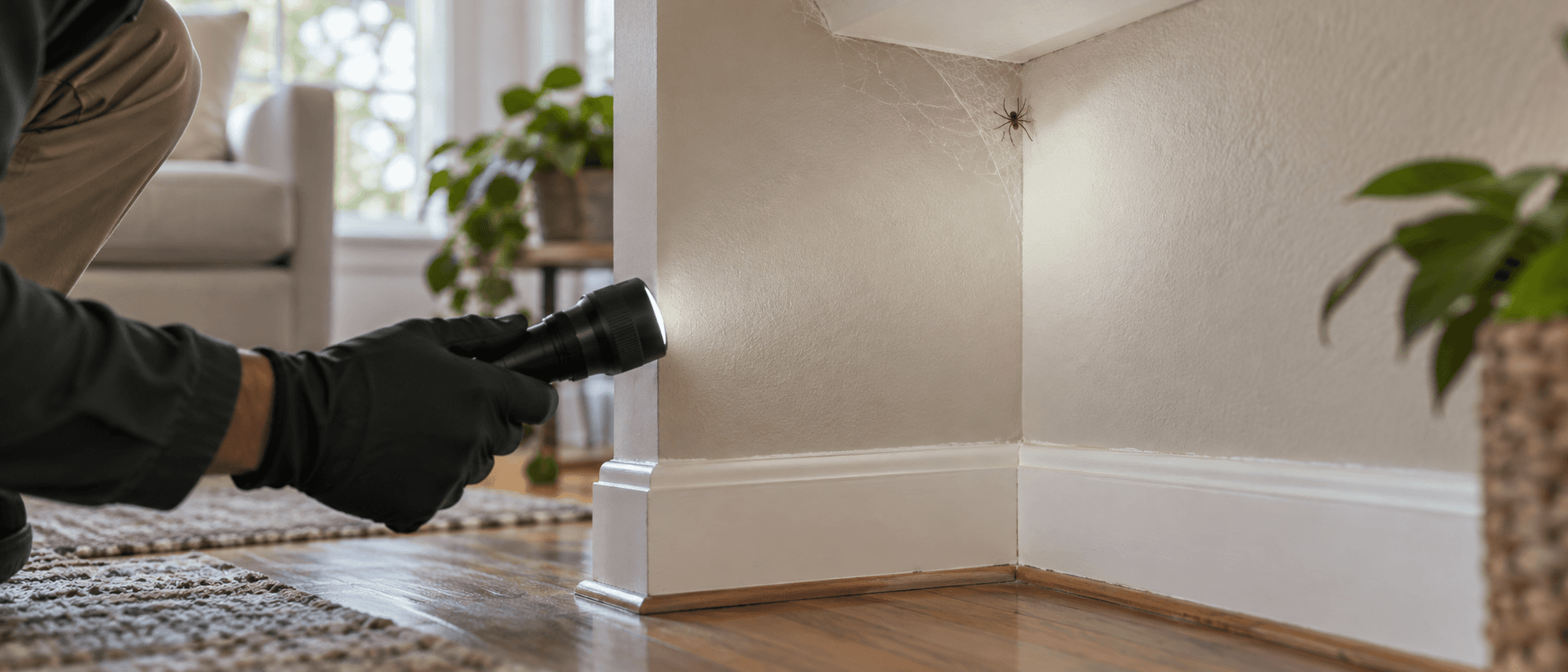
Finding a spider or web indoors can be unnerving, especially when they keep appearing in the same area. A few spiders may wander inside on their own, while repeated sightings can point to insects or entry gaps that are making a space attractive to them.
This guide explains common signs of spider activity, where spiders tend to settle, what you can do after a sighting, and how a professional inspection can help. It’s written for Chicago homeowners who want straightforward answers and practical next steps.
Signs of spider activity
Spiders are often solitary, so a single sighting does not necessarily mean there is a larger problem. These clues can help you understand whether activity is recurring:
- Fresh webs in corners, basements, garages, or around windows
- Spiders showing up repeatedly in the same rooms or along the same walls
- Egg sacs attached to webs or tucked into protected crevices
- Other small insects nearby that may be providing a food source
- Gaps around doors, windows, vents, or utility lines that could allow pests inside
Where spiders hide
Spiders look for quiet, sheltered places where they can find other insects. Indoors, that may include basements, storage areas, closets, garages, corners, and spaces behind furniture or boxes.
Outdoor lighting, clutter near the foundation, and openings around doors or windows may make it easier for insects—and the spiders that feed on them—to gather near a home. An inspection can help identify which conditions are relevant to your property.
What to do when you see a spider
A few simple steps can help you track activity and reduce places where spiders settle while you decide whether to arrange an inspection:
- Take a photo from a safe distance and note where and when you saw it.
- Remove visible webs with a vacuum or duster, then empty the vacuum outdoors.
- Reduce clutter in storage areas and keep items off the floor where practical.
- Check door sweeps and window screens for gaps and damage.
- Avoid handling spiders or applying several pest products in the same area.
How professional service helps
A professional inspection can help identify the type of spider when possible, check for recurring activity, and look for contributing insects or entry points. Your technician can explain practical control options and a plan tailored to your home.
Preparing for service
Your technician will share instructions specific to your home and service plan. These general steps can make an inspection easier:
- Make a note of sightings and the rooms or areas where you found webs.
- Clear access to corners, closets, basement areas, or other spots with activity.
- Move stored items away from walls where it is practical and safe.
- Tell your technician about children, pets, and any products you have already used.
- Follow the technician’s guidance before and after service.
A clear next step
Spiders can be startling, but seeing one does not mean you need to guess at the cause or reach for a spray right away. A professional inspection can help you understand what is happening and choose a practical plan for your home.