
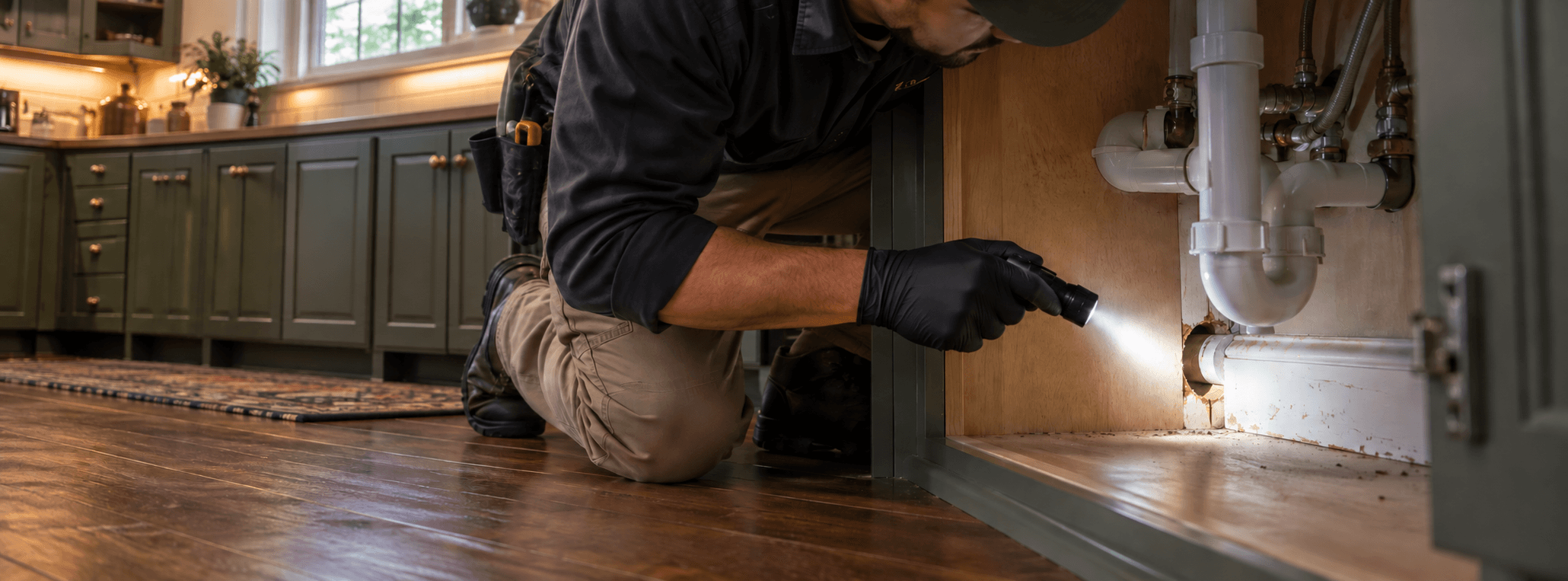
Seeing mice or rats indoors can be a sign that an opening somewhere in the building is giving them access. Rodent exclusion focuses on finding and closing those routes with sealing or protective covers suited to the location.
Every property is different. An inspection can help identify likely entry points and explain which openings may be addressed, what materials are appropriate, and whether another repair or follow-up should be considered.
What rodent exclusion means
Exclusion is the work of limiting pest access by closing gaps and protecting openings. Depending on the site, that can mean sealing a gap around a pipe or utility line, fitting a cover over an opening, or improving the fit around a door or vent.
Successful exclusion starts with understanding how a space is used. Openings for ventilation, drainage, or equipment still need to function, so the right approach depends on the opening and surrounding materials.
Where mice and rats get in
Entry points can be easy to miss, especially where building materials meet or services pass through a wall. Common areas to have checked include:
- Gaps around plumbing, cables, and utility lines
- Openings around vents, exhausts, and exterior equipment
- Spaces at foundation edges, wall joints, and damaged masonry
- Gaps around exterior doors, garage doors, and thresholds
- Roof edges, soffits, and other openings above ground level
Signs such as droppings, gnaw marks, nesting material, or repeated sightings can help point an inspection toward the areas that matter.
Sealing and covering openings
The repair depends on the size, location, and use of each opening. A small gap may call for a suitable sealant or filler; a larger or exposed opening may need a fitted cover or a more durable barrier. The material should match the surface and conditions around it.
Soft materials alone may not hold up where rodents can reach or chew them. For openings that need airflow or drainage, a fitted screen or cover can help protect access while preserving the opening’s purpose.
Our team can review the concern and discuss practical exclusion options. Major structural, roofing, plumbing, or electrical repairs may require a qualified trade professional.
What an inspection can include
A technician can review signs of rodent activity, check accessible interior and exterior areas, and note likely routes or gaps. From there, we can explain which openings may be suitable for sealing or covering and whether other pest-control steps should be part of the plan.
Setting expectations
Sealing an opening can help limit one route into a building, but it may not address every access point or resolve existing rodent activity by itself. A broader look at the property and signs of activity can help determine whether trapping, sanitation, repairs, or follow-up checks are also appropriate.
If you live in an apartment, condo, or rental home, some entry points may be part of a shared structure. Let the property manager know about building-wide concerns and check who is responsible for arranging repairs.
Talk through your next step
Share where you’ve seen activity and any openings you’re concerned about. Our Chicago team can help you understand whether an inspection and rodent exclusion are a good fit for your home.